
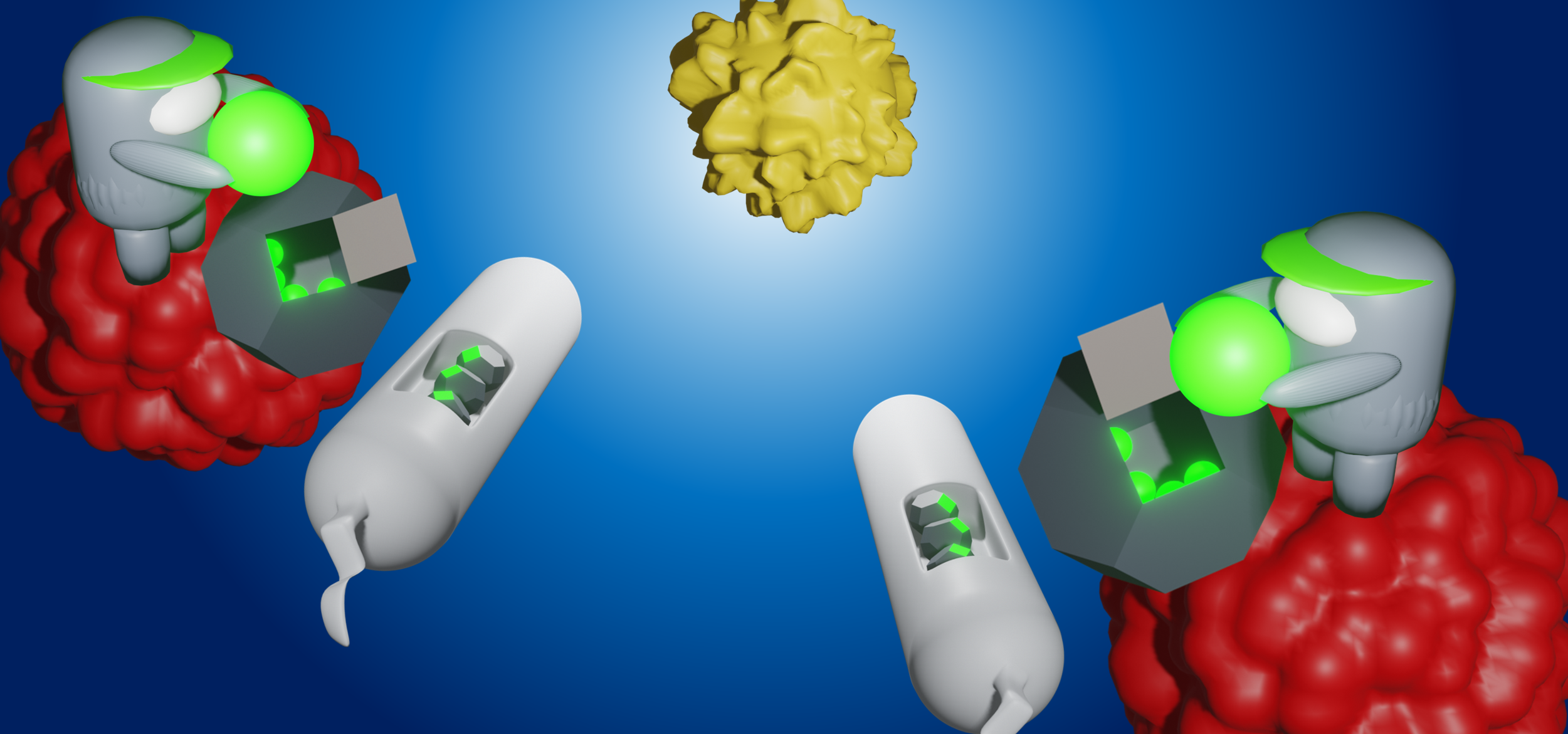
Published articles
Coercivity-size map of magnetic nanoflowers: spin disorder tunes the vortex reversal mechanism and tailors the hyperthermia sweet spot
Elizabeth M. Jefremovas*, L. Calus, and J. Leliaert

What matters for hyperthermia? Iron-oxide nanoflowers (NFs) are one of the most efficient nanoheaters for magnetic hyperthermia therapy (MHT). However, the physics underlying the spin texture of disordered iron-oxide nanoparticles beyond the single-domain limit remains still poorly understood. Using large-scale micromagnetic simulations we completely map the magnetization of NFs over an unprecedented size range, from 10 to 400 nm in diameter, connecting their microstructure to their macroscopic magnetic response. Above the single domain (d > 50 nm), the magnetization folds into a vortex state, within which the coercivity describes a secondary maximum, not present for non-disordered nanoparticles. We have extended our understanding by resolving also the NF magnetization dynamics, capturing the physics of the magnetization reversal. Within the vortex regime, two distinct reversal modes exist: i) A core-dominated one, in which the core immediately switches along the direction of the applied field, resulting in an increasing coercivity for larger sizes; and ii) a fluxclosure dominated reversal mode, going through the perpendicular alignment of the vortex core to the field, resulting in a decreasing coercivity-size dependence. The coercivity maximum is located at the transition between both reversal modes, and results from the combination of grain anisotropy and grain-boundary pinning: weak (but non-negligible) inter-grain exchange keeps the vortex profile coherent, yet allows the core to be pinned by the random anisotropy easy axes of the single grains, maximizing magnetic losses. Our results provide the first full description of spin textures in iron oxide NFs beyond the macrospin framework, and clarify the role of internal spin disorder in magnetic hyperthermia heating. By adjusting the grain size, the coercivity «sweet spot» can be tailored, offering a practical route to next-generation, high-efficiency nanoheaters.
Micromagnetic structure of oxidized magnetite nanoparticles: sharp structural versus diffuse magnetic interface
Elizabeth M. Jefremovas*, M. P. Adams, L. Gandarias, L. Marcano, J. Alonso, A. Michels and J. Leliaert
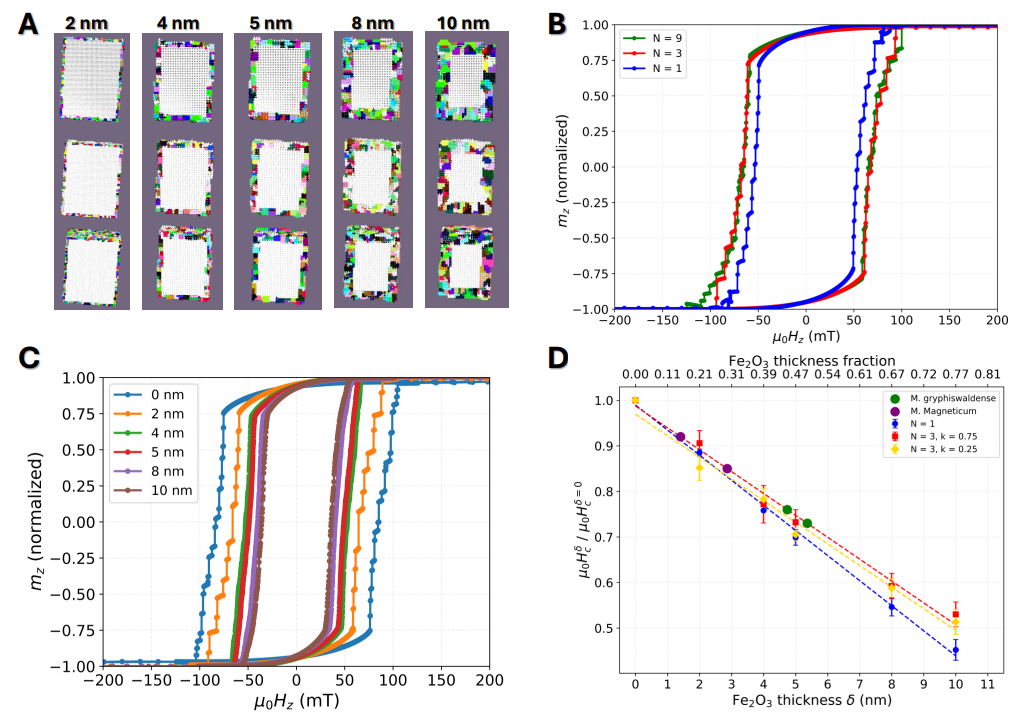
Is the geometric oxidation translated 1:1 to magnetic performance? The oxidation of magnetite to maghemite is a naturally occurring process that leads to the degradation of the magnetic properties of magnetite nanoparticles. Despite being systematically observed with traditional macroscopic magnetization measurement techniques, a detailed understanding of this process at the microscale is still missing. In this study, we track the evolution of the magnetic structure of magnetite nanoparticles during their oxidation to maghemite through numerical micromagnetic simulations. To capture realistic interparticle effects, we incorporate dipolar interactions by modeling the nanoparticles arranged in chains. Our computational results are benchmarked against experimental data from magnetotactic bacteria, studied over a time scale of years. To resolve the magnetization at the interface between both oxide phases, we propose spin-polarized small-angle neutron scattering (SANS), an experimental technique capable of probing magnetization textures at nanometer length scales. By analyzing the pair-distance distribution function extracted from SANS, we identify distinct signatures of magnetic disorder. Specifically, our findings suggest that the magnetization from the non-oxidized core region varies smoothly across the (structurally sharp) interface into the oxidized shell. The existence of such a diffuse magnetic interface may account for the superior magnetic properties of partially oxidized magnetite nanoparticles compared to fully converted maghemite samples.
Exploring the complex interplay of anisotropies in magnetosomes of magnetotactic bacteria
D. Gandia, L. Marcano, L. Gandarias, A. Gubieda, A. García-Prieto, L. Fernández Barquín, J. I. Espeso, , Elizabeth M. Jefremovas, I. Orue, A. Abad, M.L. Fdez-Gubieda, and J. Alonso.

How do the magnetic anisotropy compare in magnetotactic bacteria (MTB)? MTB are at the forefront of interest for biophysics applications, especially in cancer treatment. Magnetosomes biomineralized by these bacteria are high-quality magnetic nanoparticles that form chains inside the MTB through a highly reproducible, naturally driven process. In particular, Magnetovibrio blakemorei and Magnetospirillum gryphiswaldense MTB exhibit distinct magnetosome morphologies: truncated hexa-octahedral and cuboctahedral shapes, respectively. Despite having identical compositions (magnetite, Fe3O4) and dimensions within a similar size range, their effective uniaxial anisotropies significantly differ at room temperature, with M. blakemorei exhibiting ∼25 kJ/m3 and M. gryphiswaldense ∼ 11 kJ/m3. This prominent anisotropy variance provides a unique opportunity to explore the role of magnetic anisotropy contributions in the magnetic responses of these magnetite-based nanoparticles. This study systematically investigates these responses by examining static magnetization as a function of temperature (M vs T, 5 mT) and magnetic field (M vs μ0H, up to 1 T). Above the Verwey transition temperature (∼110 K), the effective anisotropy is dominated by the shape anisotropy contribution, notably increasing the coercivity for M. blakemorei by up to twofold compared to M. gryphiswaldense. However, below this temperature, the effective uniaxial anisotropy rapidly increases in a nonmonotonic way, significantly changing the magnetic behavior. Computational simulations using a dynamic Stoner–Wohlfarth model provide insights into these phenomena, enabling careful interpretation of experimental data. According to our simulations, below the Verwey temperature, a uniaxial magnetocrystalline contribution progressively emerges, peaking around 22–24 kJ/m3 at 5 K. Our study reveals the complex evolution of magnetocrystalline contributions, which dominate the magnetic response of magnetosomes below the Verwey temperature. This demonstrates the profound impact of anisotropic properties on the magnetic behaviors and applications of magnetite-based nanoparticles and highlights the exceptional utility of magnetosomes as ideal model systems for studying the complex interplay of anisotropies in magnetite-based nanoparticles.
Evolution at the nanoscale of magnetic clustering of the Griffiths-like phase in Tb4. 925La0.075Si2Ge2
N. Marcano, Elizabeth M. Jefremovas, I. Titov, A. Michels, N. J. Steinke, J. H. Belo, J. P. Araújo, P. A. Algarabel, and L. F. Barquín

It feels good to be, from time to time, back to the origins. Starting my scientific career in a group with a long tradition in Strongly-Correlated Electron Systems (SCES), I was asked to enroll this Griffiths phase (GP) project, putting my knowledge on disordered magnetic nanostructures to solve the questions open by Tb4.925La0.075Si2Ge2, a giant magnetocaloric compound where a re-entrant cluster-glass state (CGS) emerges at a characteristic freezing temperature TF = 140 K within the GP (110–180 K), i.e. above the Curie temperature (TC). By performing temperature-dependent DC magnetization (5–300 K), time-dependent macroscopic AC susceptibility (80–200 K), including ageing and memory experiments, and magnetic small-angle neutron scattering (SANS), above TC (110–250 K). This approach allows to reveal the microscopic structure of the GP at the nanoscale in this system. AC susceptibility and DC magnetization confirm the presence of interacting short-range ( 2 nm) ferromagnetic (FM) clusters in the GP. The Langevin-like field dependence of the isothermal magnetization provides a quantitative assessment of the temperature dependence of the cluster size. Memory effects and ageing phenomena within GP are indicative of magnetically-frustrated states. Our results reveal that the dynamics is affected by the progressive coupling among CGS and GP towards the FM state. SANS correlation lengths between 1-5 nm above T are determined from the calculated magnetic correlation function C(r), which is computed from the magnetic SANS intensity. A phenomenological model based on the formation of FM clusters with intercluster (FM) interactions within a PM matrix is proposed to explain the unusual re-entrant glassy behaviour in the PM state. These findings serve as another experimental reference for the global understanding of disordered magnetic compounds.
Controlling Skyrmion Lattice Orientation with Local Magnetic Field Gradients
D. M. Tran, E. Mangini, Elizabeth M. Jefremovas, F. Kammerbauer, D. Meier, R. Frömter, and Mathias Kläui

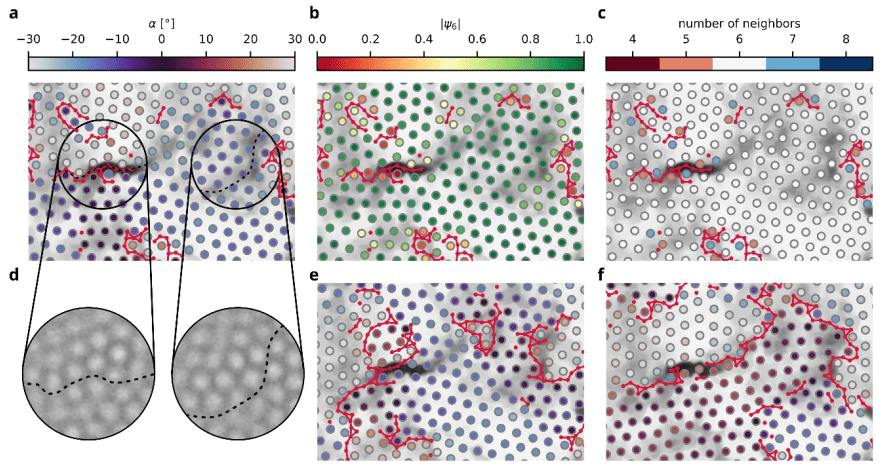
Once the skyrmion lattice is settled… is there a way to improve the ordering, delete it and re-write it? Precise control over the formation and arrangement of magnetic skyrmion lattices is essential for understanding their emergent behavior and advancing their integration into spintronic and magnonic devices. We report on a simple and minimally invasive technique to nucleate and manipulate skyrmion lattices in soft magnetic CoFeB using single-pass magnetic force microscopy (MFM). By tuning the scan-line spacing to match the intrinsic stripe domain periodicity, the stray field gradient from the MFM tip induces reversible transitions from stripe domains to isolated skyrmions and locally ordered lattices. The resulting skyrmion positions are extracted to compute the local orientational order parameter, enabling quantitative evaluation of lattice ordering. A systematic improvement in |phi6| is observed with repeated scanning, indicating a transition from a disordered state to ordered hexagonal lattices. Furthermore, we demonstrate that the lattice orientation can be deterministically rotated by changing the scanning direction, as confirmed by both real-space analysis and fast Fourier transformations. This method enables the controlled creation, reordering, and deletion of metastable skyrmion textures on demand. Our approach establishes a practical and accessible platform for studying two-dimensional phase behavior in topological spin systems, offering direct and reconfigurable control over lattice symmetry, order, and orientation.
Skyrmion Lattice Order Controlled by Confinement Geometry
R. Gruber, J. Rothörl, S. M. Frölich, M. A. Breems, F. Kammerbauer, M.-A. Syskaki, Elizabeth M. Jefremovas, S. Krishnia, A. Sudbo, P. Virnau and Mathias Kläui

In a sort of «triada lorquiana», this work packs the project of «patterning» skyrmion lattices in a controlled manner in continuous films. Magnetic skyrmions forming two-dimensional (2D) lattices provide a versatile platform for investigating phase transitions predicted by Kosterlitz-Thouless-Halperin-Nelson-Young (KTHNY) theory. While 2D melting in skyrmion systems has been demonstrated, achieving controlled ordering in skyrmion lattices remains challenging due to pinning effects from a non-uniform energy landscape, which often results in polycrystalline structures. Skyrmions in thin films, however, offer thermal diffusion with high tunability and can be directly imaged via Kerr microscopy, enabling real-time observation of their dynamics. To regulate lattice order in such flexible systems, we introduce geometric confinements of varying shapes. Combining Kerr microscopy experiments with Thiele model simulations, we demonstrate that confinement geometry critically influences lattice order. Specifically, hexagonal confinements commensurate with the skyrmion lattice stabilize monodomain hexagonal ordering, while incommensurate geometries induce domain formation and reduce overall order. Understanding these boundary-driven effects is essential for advancing the study of 2D phase behavior and for the design of skyrmion-based spintronic applications, ranging from memory devices to unconventional computing architectures.
Skyrmion Lattice Domain Formation in a Non-Flat Energy Landscape
R. Gruber, J. Rothörl, S. M. Frölich, M. A. Breems, T. Sparmann, F. Kammerbauer, M.-A. Syskaki, Elizabeth M. Jefremovas, S. Krishnia, A. Sudbø, P. Virnau and Mathias Kläui
Add-on to the stabilization of well-ordered skyrmion lattices in continuous films: Can pinning be actually used in favour of stabilizing the lattice? Magnetic skyrmions are chiral spin structures with non-trivial topology that comprise two-dimensional quasi-particles and are promising information carriers for data storage and processing devices. Skyrmion lattices in magnetic thin films exhibit Kosterlitz-Thouless-Halperin-Nelson-Young (KTHNY) phase transitions and have garnered significant interest for studying emergent 2D phase behavior. In experimental skyrmion lattices, the main factor limiting the quasi-long-range order in thin films has been the non-flat energy landscape – often referred to as pinning effects. We demonstrate direct control of the skyrmion lattice order by effectively tuning the energy landscape employing magnetic field oscillations. By quantifying lattice order and dynamics, we explore how domain boundaries form and evolve due to pinning effects in Kerr microscopy experiments and in Brownian dynamics simulations, offering a pathway to control and study emergent skyrmion lattice properties and 2D phase behavior.
Real-time observation of topological defect dynamics mediating two-dimensional skyrmion lattice melting
R. Gruber, J. Rothörl, S. M. Frölich, M. A. Breems, F. Kammerbauer, M.-A. Syskaki, Elizabeth M. Jefremovas, S. Krishnia, A. Sudbo, P. Virnau and Mathias Kläui
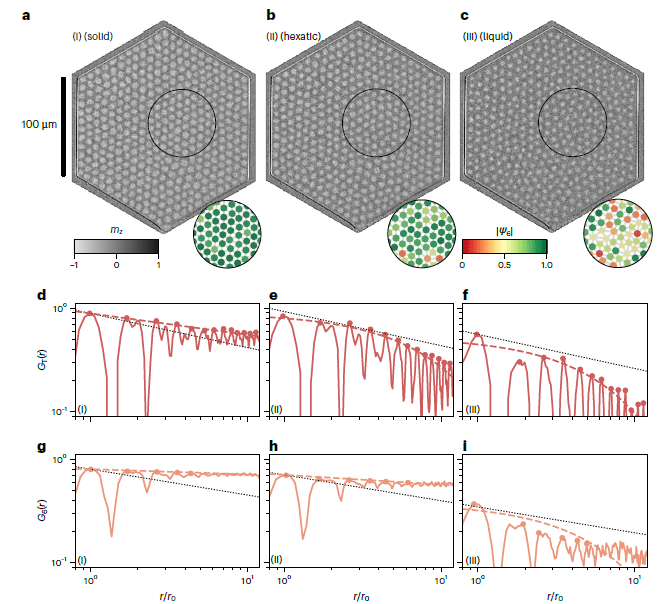
Could we explore the 2D-phase transition landscape experimentally? Topological defects are the key feature mediating those. However, both resolution and tunability have been lacking to access the dynamics of these transitions in the various two-dimensional systems explored. Skyrmions in magnetic thin films are two-dimensional, topologically non-trivial quasi-particles that provide rich dynamics as well as tunability as an essential ingredient for the control of their phase behaviour. Using dynamic Kerr microscopy, we directly capture the melting of a confined two-dimensional magnetic skyrmion lattice in a Ta/CoFeB/Ta/MgO/Ta magnetic multilayer system with high resolution in real time and real space. Using the applied magnetic field, we tune the skyrmion size and effective temperature on the fly to drive the two-step melting through an intermediate hexatic regime between the solid lattice and the isotropic liquid. We quantify the characteristic occurrence of topological defects mediating the transitions and reveal the dynamics of the lattice dislocations. The full real-time and real-space imaging reveals the diffusion coefficient of dislocations, which is two orders of magnitude higher than that of skyrmions.
Realizing quantitative quasiparticle modeling of skyrmion dynamics in arbitrary potentials
M. A. Breems, T. Sparmann, S. M. Frölich, L. C. Dany, J. Rothörl, F. Kammerbauer, Elizabeth M. Jefremovas, O. Farago, Mathias Kläui and P. Virnau
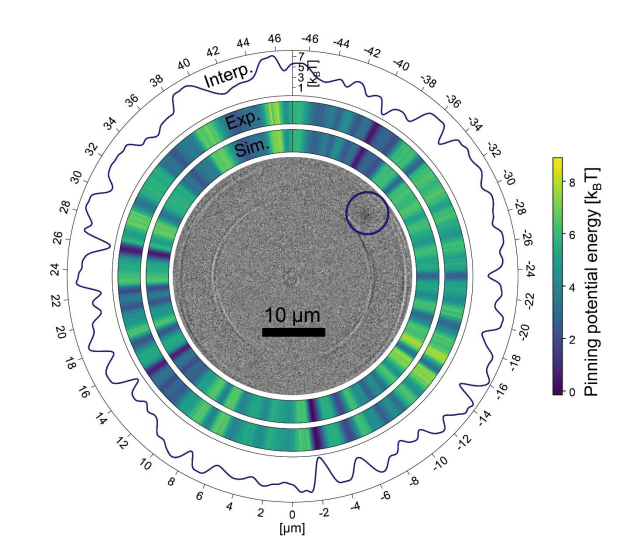
Is there a possibility to match experiments and simulations 1:1 when dealing with skyrmion dynamics in thin films? We demonstrate fully quantitative Thiele model simulations of magnetic skyrmion dynamics on previously unattainable experimentally relevant large length and time scales by ascertaining the key missing parameters needed to calibrate the experimental and simulation time scales and currentinduced forces. Our work allows us to determine complete spatial pinning energy landscapes that enable quantification of experimental studies of diffusion in arbitrary potentials within the Lifson-Jackson framework. Our method enables us to ascertain the time scales, and by isolating the effect of ultra-low current density (order 106A/m2 ) generated torques we directly infer the total force acting on the skyrmion for a quantitative modelling.
Link to preprint available on ArXiv
Link to article available on Physical Review Letters (Editor’s Pick)
Experimental realization of metastable target skyrmion states in continuous films
Elizabeth M. Jefremovas*, Noah Kent, Jorge Marqués-Marchán, Miriam Gabriele Fischer, Agustina Asenjo and Mathias Kläui
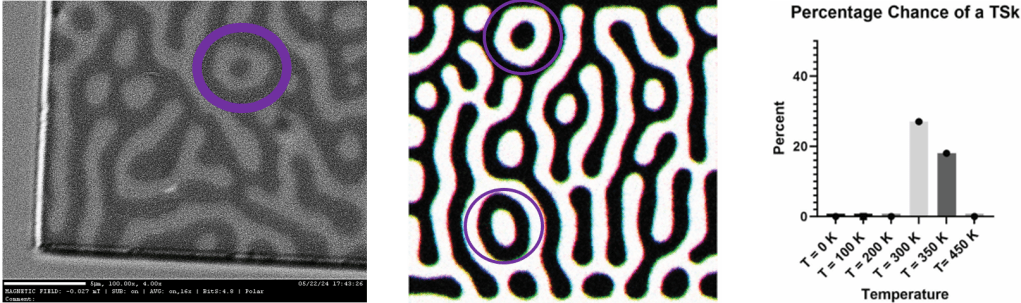
Target skyrmions (TSks) are topological spin textures where the out-of-plane component of the magnetization twists an integer number of m-π rotations. Based on a magnetic multilayer stack in the form of n×[CoFeB/MgO/Ta], engineered to host topological spin textures via dipole and DMI energies, we have successfully stabilized 1π, 2π and 3π target skyrmions by tuning material properties and thermal excitations close to room temperature. The nucleated textures, imaged via Kerr and Magnetic Force Microscopies, are stable at zero magnetic field and robust within a range of temperatures (tens of Kelvin) close to room temperature (RT = 292 K) and over long time scales (months). Under applied field (mT), the TSks collapse into the central skyrmion core, which resists against higher magnetic fields (≈ 2 × TSk annihilation field), as the core is topologically protected. Micromagnetic simulations support our experimental findings, showing no TSk nucleation at 0 K, but a ≈ 30 % probability at 300 K for the experimental sample parameters. Our work provides a simple method to tailor spin textures in continuous films, enabling free movement in 2D space, creating a platform transferable to technological applications where the dynamics of the topological textures can be exploited beyond geometrical confinements.
Link to preprint available on ArXiv
Link to article available on Applied Physics Letters (Editor’s Pick)
The role of magnetic dipolar interactions in skyrmion lattices
Elizabeth M. Jefremovas*, Kilian Leutner, Miriam Gabriele Fischer, Jorge Marqués-Marchán, Thomas B Winkler, Agustina Asenjo, Robert Frömter, Jairo Sinova and Mathias Kläui
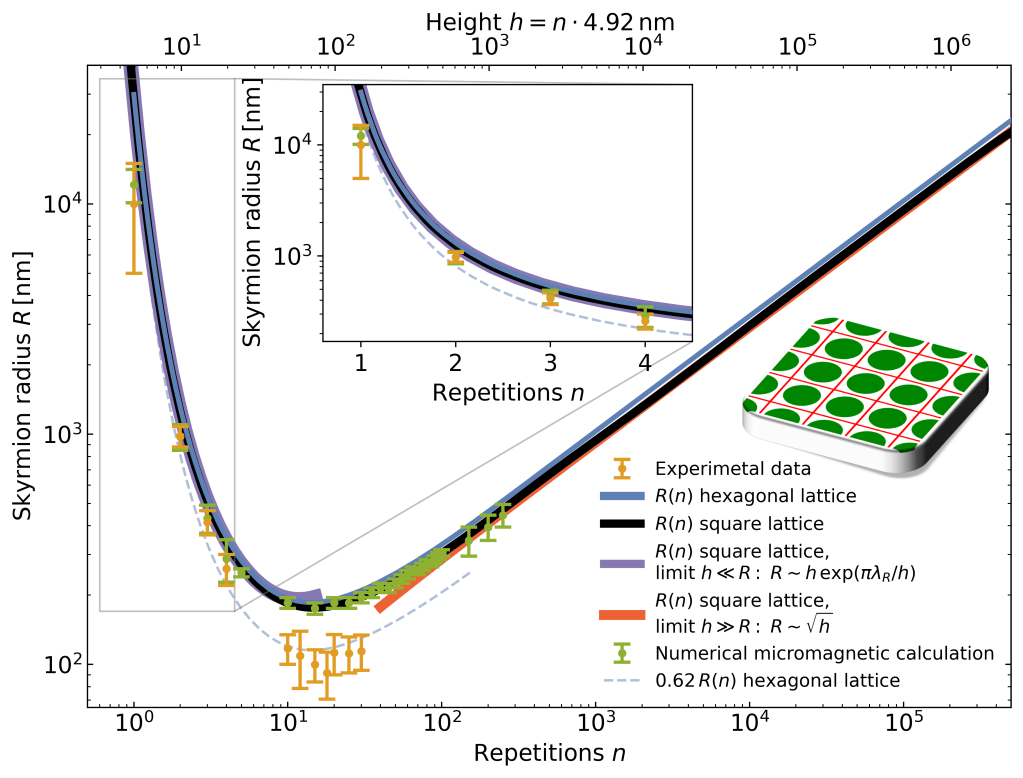
Magnetic skyrmions are promising candidates for information and storage technologies. In the last years, magnetic multilayer systems have been tuned to enable room-temperature skyrmions, stable even in the absence of external magnetic field. There are several models describing the properties of an isolated skyrmion in a homogeneous background for single repetition multilayer stack, however, the description on how the equilibrium skyrmion size in lattices scales with increasing the number of repetitions of the stack remains unaddressed. This question is essential for fundamental and practical perspectives, as the behaviour of an ensemble of skyrmions differs from the isolated case. Based on a multilayer stack hosting a skyrmion lattice, we have carried out a series of imaging experiments scaling up the dipolar interaction by repeating n times the multilayer unit, from n=1 up to n=30. We have developed an analytical description for the skyrmion radius in the whole multilayer regime, i.e., from thin to thick film limits. Furthermore, we provide insight on how nucleation by an externally applied field can give rise to a lattice with more skyrmions (thus, overfilled) than the predicted by the calculations.
Magnetic super-structure and active surface role in the onset of magnetic excitons revealed in TbCu2 nanoparticles
Elizabeth M. Jefremovas*, María de la Fuente Rodríguez, Diego Alba Venero, Cristina Echevarría–Bonet, Philipp Bender, Björn Fåk, Jesús A. Blanco & Luis Fernández Barquín

Antiferromagnetic materials are receiving renewed interest on behalf of their potential for information technologies. Recent reports have also revealed how the physics governing such magnetic arrangements and their excitations become more complex compared to traditional ferromagnetic materials, especially at the nanoscale. Here, we address two main issues that are of prime interest to their technological transfer. First, using small-angle neutron scattering, we show the existence of a magnetic helix-like super-structure in a polycrystalline TbCu2 alloy, preserved at both bulk and nanoparticle ensembles of 8 nm. Second, using inelastic neutron scattering, we elucidate the magnetic excitons and the crystalline electric field energy level schemes of TbCu2 in bulk and nanoparticle ensembles. This allows to understad the effect of the surface broken symmetry on the quantum energy levels at the nanoscale, so as the key role of interfacial effects on the propagation of magnetic excitations. Our research provides insights for the realization of magnetic moment dynamics models based on complex nanometric super-structures, and for nanoparticles to be integrated in spintronics and information technology applications.
Incorporation of Tb and Gd improves the diagnostic functionality of magnetotactic bacteria
Lucía Gandarias*, Elizabeth M. Jefremovas, David Gandia, Lourdes Marcano, Virginia Martínez-Martínez, Pedro Ramos-Cabrer, Daniel M. Chevrier, Sergio Valencia, L. Fernández Barquín, M. Luisa Fernández-Gubieda, Javier Alonso, Ana García-Prieto and Alicia Muela

Magnetotactic bacteria are envisaged as potential theranostic agents. Their internal magnetic compass, chemical specificity and natural motility enable these microorganisms to behave as nanorobots, as they can be tracked and guided towards specific regions and activated to generate a therapeutic response. Here we provide additional diagnostic functionalities to magnetotactic bacteria Magnetospirillum gryphiswaldense MSR-1 while retaining their intrinsic capabilities. These additional functionalities are achieved by incorporating Tb or Gd to the bacteria by culturing them in Tb/Gd supplemented media. The incorporation of Tb provides luminescence properties, enabling potential applications of bacteria as biomarkers. The incorporation of Gd turns bacteria into dual contrast agents for magnetic resonance imaging, since Gd adds T1 contrast to the existing T2 contrast of unmodified bacteria. Given their potential clinical applications, the diagnostic ability of the modified MSR-1 has been successfully tested in vitro in two cell models, confirming their suitability as fluorescent markers (Tb-MSR-1) and dual contrast agents for MR1 (Gd-MSR-1).
https://trebuchet.public.springernature.app/get_content/d9c0efb6-876a-4899-90d6-f7492dc3ffff
Dual disorder‑driven magnetic dynamics in GdCu2 superantiferromagnetic nanoparticles
E. M. Jefremovas, P. Svedlidh and L. Fernández Barquín
The spin dynamics in magnetically-disordered GdCu2 nanoparticles, varying the nanoparticle size in the range 53 to 7 nm, has been scrutinized. Dynamic XAC susceptibility measurements have revealed the existence of dissipation at Tg = 18 K, which is associated to the spin freezing transition, for all the ensembles. Besides, the superantiferromagnetic ensembles (<D> = 24 nm) also showcase a dissipation contribution close to the vicinity of the Néel transition, TN = 40.2 K. This dissipation, that takes the form of two humps located at Td1 = 33.5(5) K and Td2 = 40.0(5) K, is associated to uncompensated antiferromagnetic moments. Time-dependent phenomena (ageing and memory effects) are only evidenced below the spin freezing transition, evidencing that solely this low–temperature disordered phase is driven by the frustration of RKKY exchange interactions. Consequently, GdCu2 nanoparticles display a dual disorder-driven magnetic dynamics, which are the one ascribed to the magnetically-frustrated moments located at the nanoparticle surface; and that of uncompensated antiferromagnetic moments located within the nanoparticle core.
https://trebuchet.public.springernature.app/get_content/d9c0efb6-876a-4899-90d6-f7492dc3ffff

Magnetic order and disorder environments in superantiferromagnetic NdCu2 nanoparticles
E. M. Jefremovas, P. Svedlidh, F. Damay, D. Alba Venero, A. Michels, J. A. Blanco and L. Fernández Barquín
Magnetic nanoparticles display two symmetry environments: One associated to the core, assumed to maintain an arrangement very similar to the bulk, and the one related to the surface, where the bulk symmetry breaks and a disorder dynamics is usually settled. However, the precise determination on how a complex antiferromagnetic structure (helix-like) is affected by the size reduction and the surface disorder is yet to be scrutinized. In this article, we have produced two ensembles of NdCu2 nanoparticles (18 and 13 nm) to scrutinize the static magnetic structure and spin dynamics of both surface and core magnetic moments.

Modifying the magnetic response of magnetotactic bacteria: incorporation of Gd and Tb ions into the magnetosome structure
E. M. Jefremovas, L. Gandarias, L. Marcano, A. Gacía-Prieto, I. Orue, A. Muela, M. L. Fdez-Gubieda, L. Fernández Barquín and J. Alonso
May magnetotactic bacteria and rare earth (RE) ions get along with each other? Definitely, yes. In this work we have successfully doped magnetosomes synthesised by magnetotactic bacteria Magnetospirillum gryphiswaldense with Gd3+ and Tb3+ ions. The magnetic properties of the doped bacteria get altered by the substitution of Fe3+ ions by those RE3+. This boosts the potential applications of magnetotactic bacteria in the biomedical and theragnostic field.
https://pubs.rsc.org/en/content/articlepdf/2022/NA/D2NA00094F
This article has been selected as front cover of vol. 4 and included in the 2022 Popular Advances collection (including articles which have been very well received by the community) by Journal Editors.


Spin dynamics in magnetic nanoparticles
PhD. Thesis, E. M. Jefremovas
The Thesis work studies the spin dynamics in ensembles of magnetic nanoparticles, where the magnetism arises from 4f (GdCu2, NdCu2, TbxR1-xCu2) and 3d (γ-Fe2O3, Fe3O4) orbitals. The analisis of a rich variety of magnetic order and disorder states provides a deep understanding on the fundamentals beneath the interactions among the magnetic moments.
https://www.dropbox.com/s/cq61764lq3oixvt/tesis_deposito_21_Octobre.pdf?dl=0
Observation of surface magnons and crystalline electric field shifts in superantiferromagnetic NdCu2 nanoparticles
E. M. Jefremovas, M. de la Fuente Rodríguez, F. Damay, B. Fåk, A. Michels, J. A. Blanco, and L. F. Barquín
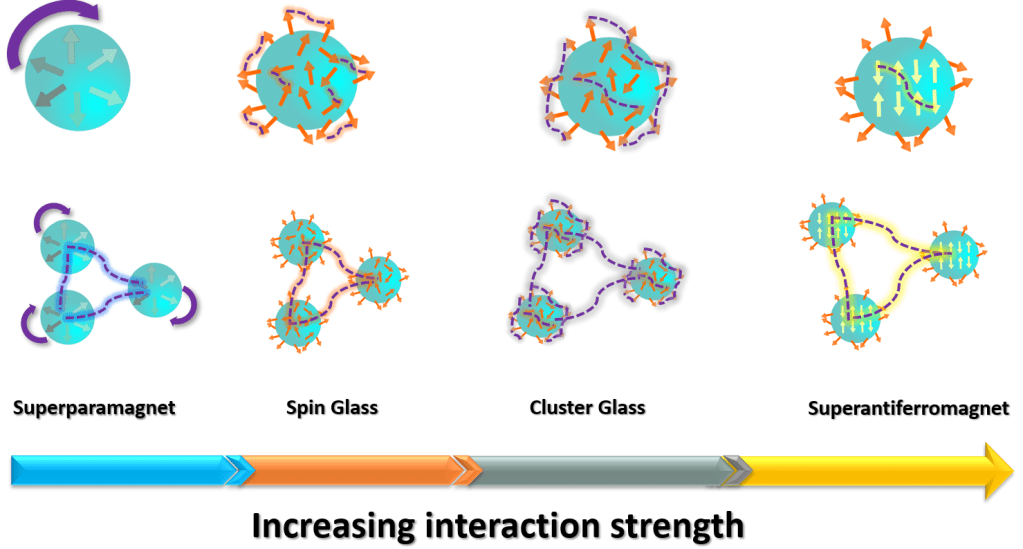
Check out our work on NdCu2 nanoparticles. Thanks to the use of Inelastic neutron scattering, we have been able to observe the crystalline electric field splitting, and the magnon excitations, in these 4f ensembles of nanoparticles. We have also been able to observe such excitations taking place at the nanoparticle surface, which is unprecedent in 4f ensembles of nanoparticles. https://journals.aps.org/prb/abstract/10.1103/PhysRevB.104.134404

Nanoflowers Versus Magnetosomes: Comparison Between Two Promising Candidates for Magnetic Hyperthermia Therapy
E. M. Jefremovas, L. Gandarias, I. Rodrigo, L. Marcano, C. Grüttner, J. A. García, E. Garayo, I. Orue, A. García-Prieto, A. Muela, M. Fdez-Gubieda, J. Alonso and L. F. Barquín
Magnetic Fluid Hyperthermia mediated by iron oxide nanoparticles is one of the most promising therapies for cancer treatment. Among the different candidates, magnetite and maghemite nanoparticles are on top due to both their performance and their biocompatibility. Nonetheless, up to date, the literature comparing the heating efficiency of magnetite and maghemite nanoparticles of similar size is scarce. To fill this gap, here we provide a comparison between commercial Synomag Nanoflowers (pure maghemite) and bacterial magnetosomes (pure magnetite) synthesized by the magnetotactic bacterium Magnetospirillum gryphiswaldense of <D> ≈ 40–45 nm. Both types of nanoparticles exhibit a high degree of crystallinity and an excellent degree of chemical purity and stability. The structural and magnetic properties in both nanoparticle ensembles have been studied by means of X–Ray Diffraction, Transmission Electron Microscopy, X–Ray Absorption Spectroscopy, and SQUID magnetometry. The heating efficiency has been analyzed in both systems using AC magnetometry at several field amplitudes (0–88 mT) and frequencies (130, 300, and 530 kHz).

Exploring the Different Degrees of Magnetic Disorder in TbxR1−xCu2 Nanoparticle Alloys
E. M. Jefremovas, M. de la Fuente Rodríguez, J. Alonso, J. Rodríguez, J.. I. Espeso, I. Puente-Orench, D. P. Rojas, A. García-Prieto, M. L. Fdez-Gubieda, L. Rodríguez and L. F. Barquín
Recently, potential technological interest has been revealed for the production of magnetocaloric alloys using Rare-Earth intermetallics. In this work, three series of TbxR1−xCu2 (R ≡ Gd, La, Y) alloys have been produced in bulk and nanoparticle sizes via arc melting and high energy ball milling. Rietveld refinements of the X-ray and Neutron diffraction patterns indicate that the crystalline structure in all alloys is consistent with TbCu2 orthorhombic Imma bulk crystalline structure. The analyses of the DC-magnetisation (MDC) and AC-susceptibility (χAC) show that three distinct degrees of disorder have been achieved by the combination of both the Tb3+ replacement (dilution) and the nanoscaling. These disordered states are characterised by transitions which are evident to MDC, χACand specific heat. There exists an evolution from the most ordered Superantiferromagnetic arrangement of the Tb0.5La0.5Cu2 NPs with Néel temperature, TN∼ 27 K, and freezing temperature, Tf ∼ 7 K, to the less ordered weakly interacting Superparamagnetism of the Tb0.1Y0.9Cu2 nanoparticles (TN absent, and TB ∼ 3 K). The Super Spin Glass Tb0.5Gd0.5Cu2 nanoparticles (TN absent, and Tf ∼ 20 K) are considered an intermediate disposition in between those two extremes, according to their enhanced random-bond contribution to frustration.

Investigating the Size and Microstrain Influence in the Magnetic Order/Disorder State of GdCu2 Nanoparticles
E. M. Jefremovas, J. Alonso, M. de la Fuente Rodríguez, J. Rodríguez, J. I. Espeso, D. P. Rojas, A. García-Prieto, M. L. Fdez-Gubieda, and L. F. Barquín
A series of GdCu2 nanoparticles with controlled sizes ranging from 7 nm to 40 nm has been produced via high-energy inert-gas ball milling. Rietveld refinements on the X-ray diffraction measurements ensure that the bulk crystalline Imma structure is retained within the nanoparticles, thanks to the employed low milling times ranging from t = 0.5 to t = 5 h. The analysis of the magnetic measurements shows a crossover from Superantiferromagnetism (SAF) to a Super Spin Glass state as the size decreases at NP size of ⟨D⟩ ≈ 18 nm. The microstrain contribution, which is always kept below 1%, together with the increasing surface-to-core ratio of the magnetic moments, trigger the magnetic disorder. Additionally, an extra contribution to the magnetic disorder is revealed within the SAF state, as the oscillating RKKY indirect exchange achieves to couple with the aforementioned contribution that emerges from the size reduction. The combination of both sources of disorder leads to a maximised frustration for ⟨D⟩≈ 25 nm sized NPs.

Collaborations
MuMag2022: a software tool for analyzing magnetic field dependent unpolarized small-angle neutron scattering data of bulk ferromagnets
Michael P. Adams*, Mathias Bersweiler, Elizabeth M. Jefremovas* and Andreas Michels*
Work in collaboration with the Magnetic Neutron Scattering Group of the University of Luxembourg.
The MATLAB-based software tool MuMag2022 is presented for the analysis of magnetic-field-dependent unpolarized small-angle neutron scattering (SANS) data of bulk ferromagnets such as elemental nanocrystalline ferromagnets, magnetic nanocomposites or magnetic steels. On the basis of the micromagnetic theory for the magnetic SANS cross section, the program analyzes unpolarized total (nuclear and magnetic) SANS data within the approach-to-saturation regime. The main features of MuMag2022 are the estimation of the exchangestiffness constant, and of the strength and spatial structure of the magnetic anisotropy field and the magnetostatic field due to longitudinal magnetization fluctuations. MuMag2022 is open source and available as a standalone executable for Windows at https://mumag.uni.lu.
Suppression of ferromagnetic order in CuO/Cu2O nanocomposites
R Das, J Alonso, EM Jefremovas, L Fernández Barquín, PK Ngoc, HT Nguyen, DT Viet, PV Vinh, AT Duong
Work in collaboration with Dr. R. Das (Faculty of Materials Science and Engineering, Phenikaa University, Hanoi 12116, Vietnam). With increasing the Cu2O content, a progressive dissappearance of the ferromagnetic phase evidenced by single phase CuO nanoparticles was revealed, all along with the increase of an antiferromagnetic contribution at low temperatures (2-5 K). When the amount of Cu2O is increased to 91%, this AF phase is also suppressed. These magnetic changes showcase the relevance of the interface effects introduced by the Cu2O phase in CuO/Cu2O nanocomposites.

Spontaneous Formation of Core@shell Co@Cr Nanoparticles by Gas Phase Synthesis
Jimena Soler-Morala, E. M. Jefremovas, Lidia Martínez, Álvaro Mayoral, Elena H Sánchez, Jose A De Toro, Elena Navarro, Yves Huttel
This work presents the gas phase synthesis of CoCr nanoparticles using a magnetron-based gas aggregation source. The effect of the particle size and Co/Cr ratio on the properties of the nanoparticles is investigated. In particular, we report the synthesis of nanoparticles from two alloy targets, Co90Cr10 and Co80Cr20. In the first case, we observe a size threshold for the spontaneous formation of a segregated core@shell structure, related to the surface to volume ratio. When this ratio is above one, a shell cannot be properly formed, whereas when this ratio decreases below unity the proportion of Cr atoms is high enough to allow the formation of a shell. In the latter case, the segregation of the Cr atoms towards the surface gives rise to the formation of a shell surrounding the Co core. When the proportion of Cr is increased in the target (Co80Cr20), a thicker shell is spontaneously formed for a similar nanoparticle size. The magnetic response was evaluated, and the influence of the structure and composition of the nanoparticles is discussed. An enhancement of the global magnetic anisotropy caused by exchange bias and dipolar interactions, which enables the thermal stability of the studied small particles up to relatively large temperatures, is reported.

Unusual magnetic behaviour of binary YbNi3 alloy
D. P. Rojas, J. I. Espeso, J. Rodríguez, E. M. Jefremovas
This work presents the gas phase synthesis of CoCr nanoparticles using a magnetron-based gas aggregation source. The effect of the particle size and Co/Cr ratio on the properties of the nanoparticles is investigated. In particular, we report the synthesis of nanoparticles from two alloy targets, Co90Cr10 and Co80Cr20. In the first case, we observe a size threshold for the spontaneous formation of a segregated core@shell structure, related to the surface to volume ratio. When this ratio is above one, a shell cannot be properly formed, whereas when this ratio decreases below unity the proportion of Cr atoms is high enough to allow the formation of a shell. In the latter case, the segregation of the Cr atoms towards the surface gives rise to the formation of a shell surrounding the Co core. When the proportion of Cr is increased in the target (Co80Cr20), a thicker shell is spontaneously formed for a similar nanoparticle size. The magnetic response was evaluated, and the influence of the structure and composition of the nanoparticles is discussed. An enhancement of the global magnetic anisotropy caused by exchange bias and dipolar interactions, which enables the thermal stability of the studied small particles up to relatively large temperatures, is reported.
https://www.sciencedirect.com/science/article/abs/pii/S0304885319313642

 Elizabeth M Jefremovas